
Lawn Care Help: Reviving Brown or Dead Grass
Southern Lawns Can Recover With the Right Approach
Has your beautiful green yard suddenly turned brown? This kind of change can be incredibly frustrating. It’s easy to feel like you’ve somehow messed up. Maybe you’re tempted to assume it’s dead grass and rip everything out.
Hold off on any extreme measures. Let’s first figure out what’s really happening with your grass. This guide explains how to tell dormant grass from dead grass, with professional insights from the lawn care experts at Green Queen!
Is Your Grass Dead or Just Sleeping?
Dormancy isn’t a problem at all. Think of it like your lawn taking a nap, waiting patiently for better weather conditions. Dead grass is completely different—that’s when roots and crown have quit entirely with zero chance of recovery.
So how do you tell them apart? Get right down to ground level and check the area near the roots. Any green coloring at the grass’s base means your turf is simply dormant.
Here’s another method: Try the pull test by gently tugging on some grass. Dormant grass stays firmly in place because its roots are still healthy. Dead grass pulls up easily with minimal resistance.
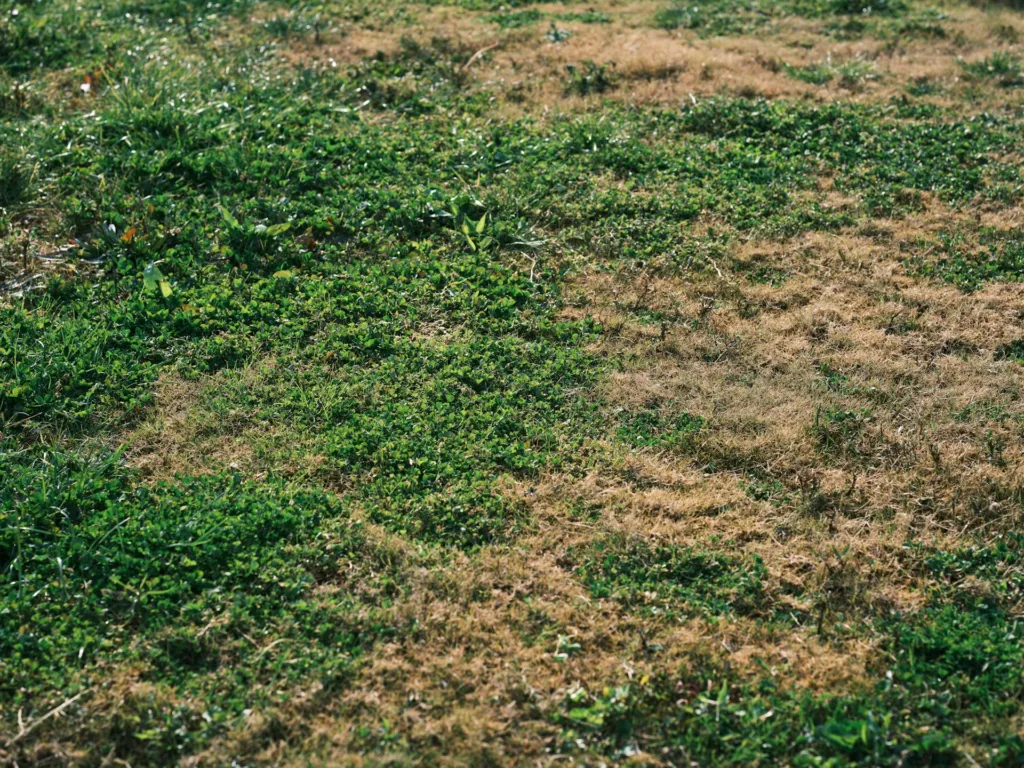
Keep in mind that dormant brown grass shows consistent coloring across your entire lawn, with blades standing straight. The color might be tan or straw-like. However, if your brown patches are uneven, feel squishy, or smell foul, something more serious than dormancy is happening.
Understanding Grass Dormancy
During Southern winters, your grass often enters dormancy or experiences frost-related damage. But that doesn’t mean it’s dead. Warm-season varieties like Bermuda, Zoysia, Bahia, and St. Augustine stop growing and turn brown or lose their vibrant color.
Why does this happen? Less sunlight limits photosynthesis. Cooler temperatures slow warm-season grass growth and trigger color changes—a completely natural response.
Meanwhile, important processes continue below ground as soil undergoes decomposition. Microorganisms keep breaking down organic materials, slowly releasing nitrogen, phosphorus, and potassium that become available when grass reactivates in spring.
Location Determines Dormancy
Cool-season grasses like fescue or bluegrass enter dormancy during summer when water runs low. Your lawn might brown out in July and August during peak heat, then green up once cooler, wetter conditions arrive.
Warm-season grasses behave differently, going dormant in winter and returning in spring. These Southern grass types maintain green color throughout summer while cool-season varieties struggle.
Your specific location influences grass behavior significantly. In North Carolina’s transition zone, warm-season grasses start entering dormancy when late fall nighttime temperatures reach around 50°F. Further south, identical grass types might not go dormant until December.
What’s Actually Harming Your Grass?
When brown grass is genuinely dead, you’ve got a real problem. But you need to identify the cause before attempting any fixes.
Thatch buildup. This squishy layer of decomposing roots and stems sits between living grass and soil. When it accumulates beyond half an inch, water runs off instead of soaking in, and disease organisms multiply underneath.
Incorrect soil pH. When pH is too acidic or alkaline, grass cannot absorb nutrients properly. Most lawns thrive with pH between 6.0 and 7.0. Outside that range, grass progressively weakens.
Pet urine creates brown circles with bright green outer rings. The concentrated nitrogen blast scorches the center while fertilizing the edges. Every dog owner knows this headache.
Watering mistakes rank among the most common causes of lawn damage. Insufficient water stresses grass, shrivels roots, and eventually kills the entire plant. Excessive water suffocates roots, leading to rot and fungal invasions. Uneven irrigation creates dry patches throughout your yard.
Packed soil. Maybe you’re dealing with heavy clay, constant foot traffic, or years without aeration. Soil becomes dense, preventing root expansion, water penetration, and air circulation. Your lawn gradually deteriorates over time.
Bug infestations. Grubs consume roots, destroying grass from below. You probably won’t spot the problem until serious damage occurs. Other attacking insects, depending on your location and grass type, include billbugs, armyworms, chinch bugs, and more.
Poor timing for lawn care. Overseeding warm-season grass right before frost? It won’t germinate. Applying heavy nitrogen during peak summer heat? You’re inviting problems.
Diseases and fungal infections. These create irregular brown patches. Brown spot fungus produces large circular dead areas. Dollar spot creates small round dead zones. Red thread shows up as pinkish discoloration before grass dies.
Step-by-Step Guide to Healing a Dead Yard
- Identify the Cause
Begin with a soil test to reveal pH levels, nutrient deficiencies, and organic matter content. Then check drainage by walking your property after rainfall and noting where water pools.
Pull up grass samples from various spots to examine roots. Are they brown and mushy, or white and vigorous? Shallow, weak roots suggest soil or watering problems. Deeper, robust roots indicate different issues.
- Get Your Lawn Ready
Start by removing all weeds. Next, cut grass down to 1-2 inches. Seeds need direct soil contact rather than sitting on existing grass where they’ll dehydrate.
Also, rake up everything—leaves, branches, acorns, and other debris. If thatch exceeds half an inch thickness, consider dethatching.
Finally, aerate your entire lawn. Aeration relieves compaction and allows your lawn to “breathe,” improving water and nutrient absorption.
- Restore Your Turf
Grass seed on compacted ground dries out before germination can occur. Without starter fertilizer, any seedlings that emerge struggle to survive.
Timing matters enormously. Cool-season grasses do best when seeded in early fall, with spring as a secondary option. Soil temperatures drop from summer heat to roughly 50-65°F, encouraging germination. Warm-season grasses thrive when planted during late spring or early summer once soil temps reach 65-70°F consistently.
After spreading seed, rake very lightly to ensure seed-soil contact. Some homeowners add a thin layer of compost or topsoil for extra support.
- Water Correctly
Keep soil consistently moist—evenly damp—for the first 2-3 weeks. This usually means daily watering, possibly twice daily during hot, dry, or windy weather. Light, frequent watering works best. The soil’s top layer should feel slightly moist to the touch.
Once grass emerges and reaches 1-2 inches tall, typically within weeks, transition to deeper but less frequent watering. This encourages strong downward root growth.
By weeks 4-6, establish your regular routine of 2 inches of water weekly, delivered through one or two thorough soakings rather than daily sprinkles.
- Maintain Your Progress
Mow regularly without cutting too aggressively. Never remove more than one-third of blade height in a single mowing. Continue watering even after new grass becomes established.
Finally, fertilize your lawn consistently to achieve that lush, vibrant appearance every homeowner desires!
Regional and Seasonal Guidance
Your location determines what works. Northern strategies often fail completely in Southern climates.
Southern Lawns
Spring provides your best recovery window. Late April through June is ideal for Bermuda, Zoysia, St. Augustine, and Bahia.
Late summer to early fall is preparation time for the coming year. Apply final pre-winter fertilizer, eliminate persistent weeds, and prep for dormancy so your lawn rebounds strongly in spring.
Cool-Season Lawns
The best revival periods for cool-season yards are early spring (late March through May) and early fall (late August through October). Fall actually offers better results because you avoid stressing grass with immediate summer heat after emergence.
After a brutal summer, fall overseeding fills thin areas and introduces hardier grass varieties. Your soil likely needs nitrogen replenishment after winter since much leaches away or becomes locked up during cold months.
Watch for fungal issues like snow mold in spring. Gray, matted patches appear after snow melts. Rake them thoroughly and apply fungicide if necessary to prevent spreading.
Frequently Asked Questions About Dead Grass
What if only some patches are dead?
- Just address those specific areas. Complete lawn renovation isn’t necessary. Determine what killed those zones, treat the underlying problem, fix your soil, and reseed using the same grass type for consistent results.
Can brown grass turn green again?
- If merely dormant, definitely. If truly dead, recovery is impossible. Check by doing the pull test and examining the base for green coloring.
Will fertilizer revive dead grass?
- No, fertilizer only benefits living plants. It accelerates healthy grass growth and fills bare spots, but cannot resurrect dead patches.
Should you mow dead grass?
- Absolutely, especially when planting new seed! Keeping grass short reveals thin spots and gives seeds better ground contact instead of leaving them exposed where birds might eat them.
How long does grass survive without water?
- It depends on the type. Cool-season grasses last 2-4 weeks before visible damage appears. Warm-season types like Bermuda can endure 3-6 weeks during dormancy. Without rain beyond that, they’ll die.
Enjoy Eco Lawn Care From Your Local Experts
There are a lot of different reasons why your grass may look brown and dead. Want to avoid the stress and energy needed to go the DIY lawn care route? Reach out to Green Queen today to learn more about eco pest control and lawn care! We proudly offer these services to the following areas: