
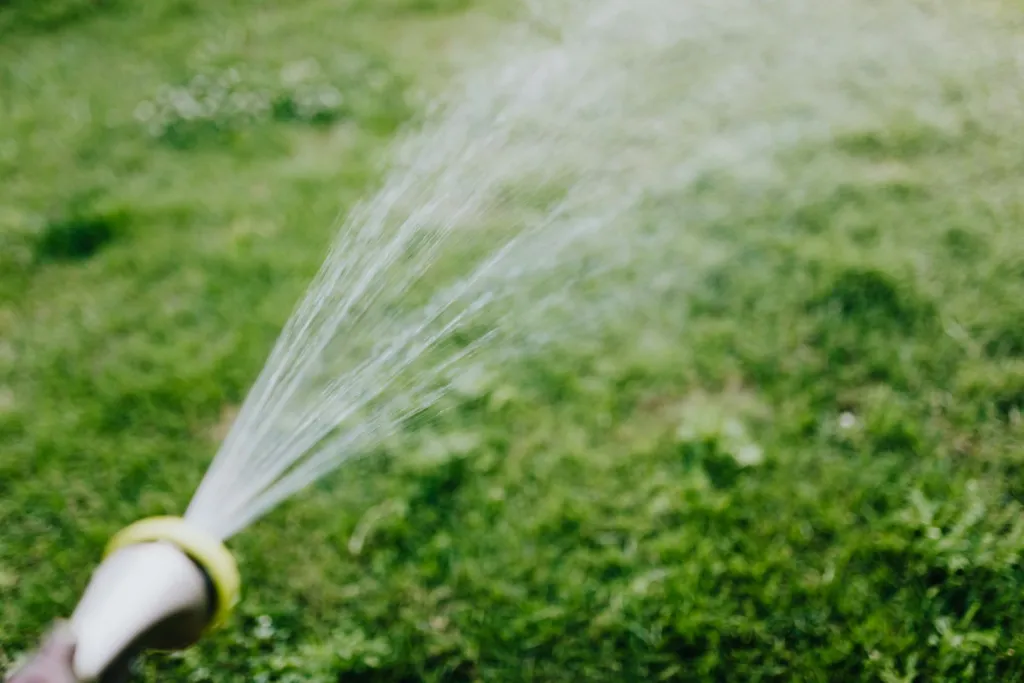
Lawn Advice: Best Time to Water Grass in the South
Discover Surprising Tips About Watering Your Yard
Think watering your lawn is as simple as grabbing a hose or turning on the sprinkler? Not quite. Not if you want a yard that actually looks good and stands up to whatever the weather throws at it.
The truth is, the best time to water grass in our region depends on your grass type, soil, and the season. There’s no one-size-fits-all. So, here’s what the Green Queen eco lawn care team suggests for watering southern lawns the right way.
How Much Water Does Your Lawn Need?
Most lawns in our area thrive with about 1 to 2 inches of water each week. That includes both rainfall and anything else you add with sprinklers. But don’t just wet the surface. You want that water to sink down 6 to 8 inches, where the roots actually live.
If you water too lightly, your grass ends up with shallow roots. Shallow roots mean weak grass that struggles when it gets hot or dry. Deep watering builds tough, healthy roots. That’s how you get a yard that stands up to stress.
So, how do you get it right? Use the cycle-and-soak trick. Instead of one long watering, run each sprinkler zone for 15 to 20 minutes, then circle back for a second round. The first round soaks in, the break lets the soil absorb it, and the second round drives the water deeper. This helps roots grow strong and cuts back on water wasted as runoff.

When’s the Best Time to Water Your Grass?
Timing matters more than most people think. Early morning is best. Think dawn to around 10 a.m. Plants wake up and start pulling water from the soil as soon as the sun rises, so you want water available right when your grass needs it. Plus, mornings are usually calmer, so you lose less water to wind and evaporation, and water pressure tends to be better.
If you can’t manage mornings, late afternoon (around 4 to 6 p.m.) is a backup. Just know that watering too late risks fungal diseases. As night falls, moisture hangs around on the grass, and that can invite fungus and bugs.
The worst time to water your grass? Midday, between 10 a.m. and 4 p.m. The heat makes water evaporate fast, so most of what you put down disappears before your grass can use it.
How Often Should Southern Lawns Be Watered?
Here’s a surprise: Your grass does better with deep, less frequent watering. Skip the daily sprinkle. Water deeply two or three times a week instead. This encourages roots to grow down, which makes your lawn tougher and healthier.
Stay flexible, though. Weather changes, dry spells, and even city water restrictions can mess with your routine. Keep an eye on the forecast and on your yard.
What happens when you water too much? More water doesn’t mean better grass. Overdo it and you’ll see puddles, fungus, yellow patches, soggy spots, and wasted water running off.
What about too little? Healthy grass looks lush and bounces back when you walk on it. If it starts looking faded, bluish, or the blades curl up and footprints stick around, it’s thirsty. That’s a sign your lawn needs more water.
Know Your Grass for Better Results
Warm-season grasses like Bermuda, St. Augustine, and zoysia handle southern heat and drought better than cool-season types. They don’t need watering as often as northern grasses do.
On the other hand, Kentucky bluegrass, fescue, and ryegrass (northern varieties) need more water because they’re not built for the heat.
Soil types matter, too. Clay soil hangs onto water longer, so water less often but take it slow to prevent runoff. Clay soaks up water slowly, so give it time. Sandy soil drains fast. You’ll need to water more often, but use less each time. Loamy soil is the dream. It balances drainage and moisture retention, so you can usually stick with standard watering without fussing much.
Watering Grass In Each Season
Spring
Spring often brings plenty of rain. You might only need to water if it’s been more than five days since the last good shower. Watch for signs of new growth. If you see it, your lawn’s waking up.
As temperatures rise, grass shifts out of dormancy and starts growing. Adjust your watering based on local weather and how your lawn looks.
Summer
Summer can be tough. Long, hot stretches harden the soil and block water from soaking in. Sometimes you end up with dry patches or soggy spots from runoff.
If you notice water pooling or running off, consider aerating the lawn or calling in a pro to tackle compaction. Longer, hotter days and less rain mean you need to water early and deeply.
Fall
As it cools down, evaporation slows and your grass needs less water. Shorter days and more rain let you back off the sprinklers. Always check the forecast, but more importantly, watch your lawn. The way it looks is often your best guide for the steps you need to take.
Winter
Freezes do happen. The best defense is to winterize your sprinkler system. Drain out as much water as you can and wrap any exposed pipes to keep them from freezing and cracking.
In the end, your lawn tells you what it needs. Pay attention and adjust as you go. That’s really the secret to a yard that looks good year-round.
Also, and this shocks lots of people, remember to keep watering in winter. However, only do so when it’s warmer than 40°F. Down south, you’ll still need to water now and then during those warm, dry stretches.
Save Water With These Helpful Tips
- Planting new grass or overseeding? Choose drought-resistant varieties. These usually handle dry spells better.
- If your soil is compacted or heavy clay, aerate it so water sinks in instead of running off.
- Add a rain sensor to your sprinklers. It automatically shuts off when it rains.
- Put mulch around borders and trees to hold in moisture and cut down on evaporation.
- Upgrade to smart controllers that use real weather data. They’ll run your sprinklers only when needed and help you save water.
- Use drip irrigation for gardens, pots, or landscaped spots. It puts water right at the roots and keeps waste down.
Watering Established & New Lawns
Established Lawns
This isn’t too complicated. Stick to the 1 to 2 inches a week, and really soak it when you do. The idea is to train your grass to grow deep roots, so less frequent, deeper watering is better. Honestly, a mature lawn does best when you leave it alone most of the time.
New Lawns
Brand-new grass takes a bit more attention. Mist the area once or twice a day until you see sprouts (usually in about 10 days, depending on the grass). When those new blades reach around 3 inches tall, you can cut back to watering twice a week. You’re getting your grass ready for a regular schedule.
Typical Watering Mistakes
Don’t ignore your grass type, soil, or the season. Your yard needs different care at different times, and missing that means problems. Adjust as needed.
- Uneven coverage? That’s usually because of sprinkler heads aimed wrong, bad layout, or broken parts. If you see brown spots next to swampy ones, your system needs work. Professionals can help make sure every section gets the right amount of water.
- Check your city’s rules. Breaking watering restrictions can get expensive fast.
- Watering too much leads to weak, shallow roots.
- Wrong timing wastes water and can bring in disease. Early morning is the best time to water southern grass. Mid-afternoon is the worst.
DIY Ways to Monitor Your Watering
Tuna Can
Put a few empty tuna cans (or any shallow container) around the yard. Turn on the sprinklers. Once there’s about an inch of water in the cans, you’re set. This also shows if you’ve got even coverage.
Screwdriver
After watering, push a screwdriver into the soil. If it slides in 6 to 8 inches deep, you’ve watered enough. If not, you need to go deeper.
Flow Rate/Timer
If you’re the math type, figure out your sprinkler’s gallons per minute (GPM) and compare it to your yard’s size. Time how long it takes to fill a container of known volume, then use: (Gallons / Seconds) x 60 = GPM.
Grass Watering FAQs
Can I skip watering if it rains?
Absolutely. Check how much rain you got, then adjust your schedule. If your lawn got a good soak, let the sprinklers take a break.
What’s the best sprinkler system for my lawn size?
The right system is the one that fits your yard’s needs. It covers the area, runs efficiently, adapts to what you’ve got, and actually helps your grass grow. Off-the-shelf setups rarely do all that.
How do I know if I’m overwatering or underwatering?
Too much water shows up as yellow or brown patches, bare spots, or mushrooms. Too little leaves your grass grayish and slow to bounce back after you walk on it.
What are the signs of drought stress?
If footprints stay in the grass, blades droop or curl, or your lawn turns blue-gray, it’s asking for water as soon as you can provide it.
How do I water during restrictions?
Focus on watering deeply but less often, sticking to your allowed days. Make every session count by letting the water really soak in.
Let’s Care for Your Grass Together!
Now you know when and how to water your grass…and a whole lot more. And honestly, if you need help with eco lawn care or pest control, now’s a great time to get in touch. Reach out to Green Queen today to learn more about any of the services we provide! We proudly serve the following areas: