
What Is Dollar Spot Fungus & How Can You Stop It?
Learn How Eco Lawn Care Helps Control This Turf Disease
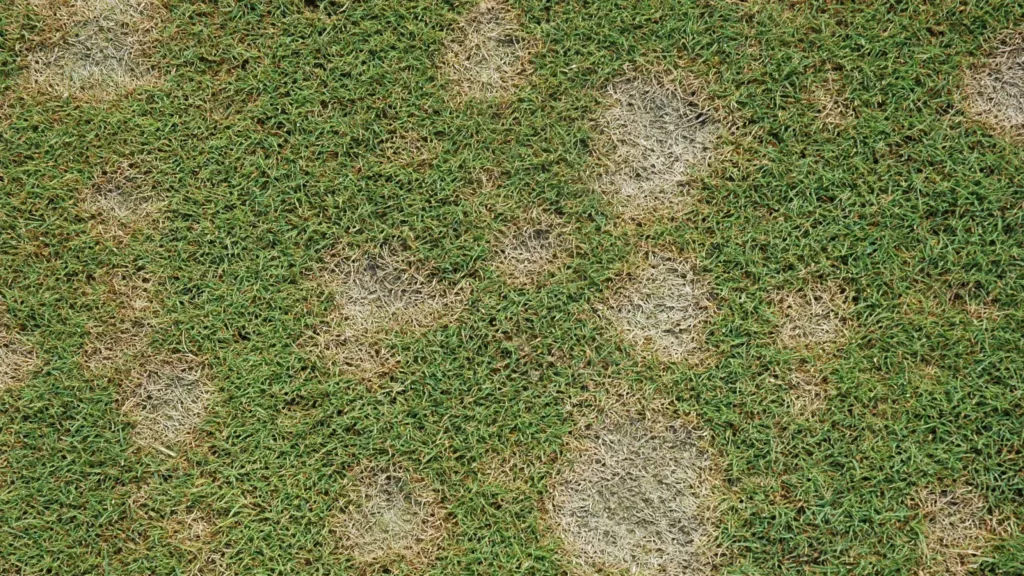
Have you noticed scattered pale circles on your otherwise green yard? If you’re not careful, in a week, there will be more of them as they connect and create larger bleached-out patches. This makes your grass look thin and almost translucent.
That’s dollar spot fungus. It’s one of the most common fungal lawn diseases in the country (and one of the most frustrating to deal with). But don’t panic! Keep reading as the team at Green Queen shares what’s happening to your lawn and what steps you can take to fix this problem with your grass.
What Is Dollar Spot Fungus?
Unlike some turf diseases that attack the root system or crown of a grass plant, dollar spot goes after the leaf blades. That distinction matters because damage just to the blades means the plant’s core structure is still intact, which gives your lawn a chance at recovery with the right approach.
This disease’s name comes from its apperance (small, roughly circular patches of damaged turf). Each is about the diameter of a silver dollar at one to two inches across. Those spots take on a bleached, straw-like color as the blades die.
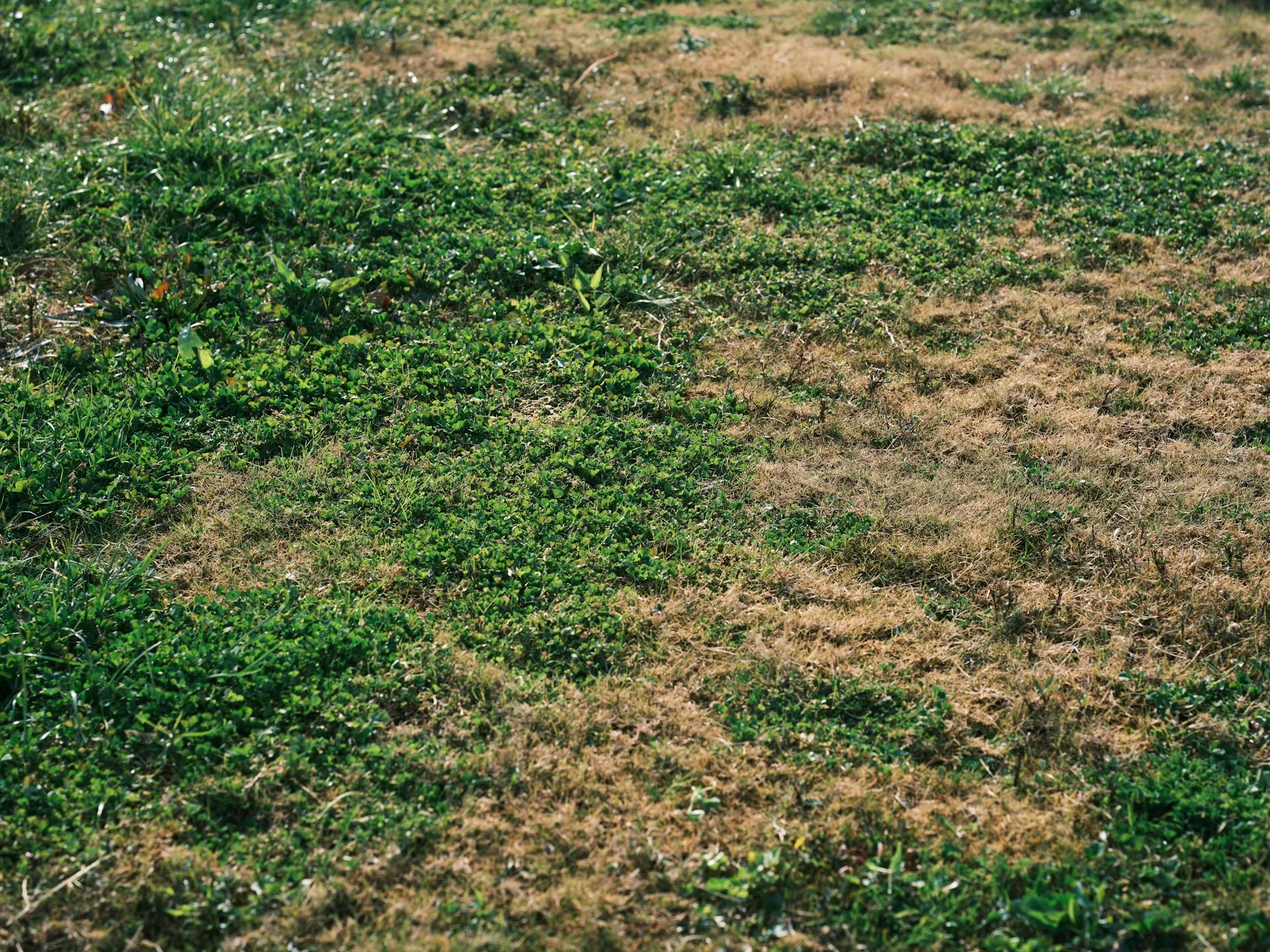
When infection is moderate to heavy, individual spots start growing into larger irregular patches. This thins the lawn significantly and creates an easy space for weeds to move in.
No grass type is immune. Dollar spot will attack cool-season varieties like Kentucky bluegrass, tall fescue, perennial ryegrass just as readily as it goes after warm-season grasses like Bermuda and zoysia. If you have turf, the potential for this fungus is real.
How to Recognize It
The circular tan patches are the most obvious indicator of dollar spot. However, there are a few other telltale signs worth knowing.
Look closely at an affected blade and you’ll find hourglass-shaped lesions. These are tan through the center with a reddish-brown border on each edge. That banded pattern is fairly distinctive and helps separate dollar spot from some lookalike issues.
The other clue comes down to timing. During mornings when dew is still present, you may notice a thin, white, cobweb-like coating on grass in affected areas. That’s mycelium, a network of threads the organism uses to spread. It disappears as the sun rises and blades dry out, so it’s easy to miss entirely if you’re not outside early. If you suspect dollar spot, checking your lawn just after dawn is worth the effort.
What Creates the Conditions for Dollar Spot?
Some conditions make dollar spot more likely. Most of them are things that happen within a lawn’s regular maintenance routine (or lack of one).
Nitrogen deficiency is a big factor. Grass that isn’t receiving the right nutrition grows more slowly and lacks the strength to recover from disease pressure. Underfed lawns are weak, and dollar spot exploits that.
Evening or afternoon watering keeps leaf surfaces wet through the night. This extends the window of moisture that the fungus needs to spread. Fortunately, this is one of the more controllable risk factors. Simply shifting your irrigation schedule makes a real difference.
Excessive thatch and compacted soil reduce airflow through the turf and limit water movement through the soil. The result is a microenvironment that stays damp longer than it should, which suits dollar spot well.
Dense shade and poor air circulation from low-hanging branches, thick shrubs, or structures that block airflow. This traps moisture around the grass and slows the drying process after rain or irrigation.
Mowing practices also play a role. Cutting too short removes the leaf surface area the plant needs for photosynthesis and stresses the grass. Dull blades tear rather than cut, leaving ragged edges that are more vulnerable to infection. Both create entry points for the disease.
When Is Dollar Spot Most Active?
This fungus has a clear temperature preference between 60°F and 90°F. Pair that range with humid daytime conditions and cool, dew-heavy nights and you have its ideal environment.
In the South, that combination describes a good portion of the year. Late spring through early fall is the primary risk window, with peak activity typically arriving in late summer when heat, humidity, and dew converge.
Unfortunately, the pathogen survives winter in dead plant debris. So when soil temperatures rise again in spring, those structures reactivate and the cycle starts over.
How does the spread of dollar spot happen? Mainly through the movement of infected material. For instance, grass clippings. As a mower cuts an infected patch and then moves to a healthy section of lawn, it can distribute the pathogen across the entire yard. It can also travel on equipment, foot traffic, and water runoff.
8 Practical Steps to Address Dollar Spot
Contain the spread
When dollar spot is active, don’t mulch clippings back into the lawn. Bag and dispose of them away from the property. After mowing through any infected area, clean the mower before moving to healthy sections. It’s an easy habit that prevents a localized problem from becoming a widespread one.
Adjust mowing height and habits
Taller grass shades the soil surface, moderates soil temperature, and creates a denser canopy that retains moisture in the root zone rather than on the leaf surface. It’s also just more resilient turf overall. Keep cuts within the upper third of the current blade height. Removing more than that in a single session stresses the plant considerably. And keep blades sharp since clean cuts heal faster than torn ones.
Correct nitrogen deficiencies
Slow-release nitrogen fertilizer applied in late spring gives grass the nutritional foundation to grow through early summer’s increased disease pressure. Following that with lighter, consistent applications throughout the growing season keeps the lawn from falling into the undernourished state that dollar spot thrives in. Well-fertilized turf can actually outgrow mild infections on its own.
Rethink your irrigation schedule
Water deeply and infrequently to achieve roughly an inch per week. Time it for early morning, ideally somewhere between 5 and 10 a.m. This window allows soil to absorb moisture before the heat of the day while giving blades enough time to dry as the sun rises. Evening watering leaves leaf surfaces wet through the night, handing dollar spot exactly the conditions it needs.
Remove morning dew
On smaller lawns, early morning mowing clears dew-covered tips before the day warms up. Some homeowners with larger properties drag a lightweight rope or hose across the turf to knock moisture off the blades. It sounds low-tech, but reducing the duration of leaf wetness disrupts the disease cycle.
Give the soil room to breathe
Annual aeration addresses compaction and opens pathways for water, air, and nutrients to reach the root zone. If your thatch layer has built up beyond about half an inch, dethatching before aerating removes the barrier that traps moisture and blocks those pathways from functioning. These aren’t optional maintenance tasks when dollar spot is a recurring issue. They’re foundational to any lasting improvement.
Trim back shade sources
Pruning low-hanging branches and thinning dense shrubs near the lawn improves airflow through the canopy. Better circulation means dew and irrigation water dry faster, shortening the period of leaf wetness that dollar spot depends on. If certain areas of your lawn are chronically shaded with poor airflow, they’ll remain high-risk regardless of other interventions.
Reach out to Green Queen!
Want eco lawn and pest control? The team at Green Queen serves homeowners in Texas, North Carolina, Georgia, and Tennessee with services that are better for people, pets, pollinators, and the planet. Our conscious applications and product selection make sure that achieving your turf’s best health still gives you peace of mind.
When to Consider Overseeding or Renovating
If dollar spot has thinned your lawn to the point where significant bare or sparse areas remain, overseeding those zones is part of the recovery process. When selecting grass seed for overseeding or a more extensive renovation, look for varieties that carry resistance to dollar spot or have been specifically developed with disease tolerance in mind.
More broadly, matching your grass type to your climate and growing conditions matters more than most homeowners realize. The right variety for your specific region and yard reduces that baseline vulnerability.
Frequent Questions About Dollar Spot Fungus
-
Will a lawn recover from dollar spot?
In most cases, yes. With appropriate nitrogen, corrected watering habits, and proper mowing height, most lawns show visible improvement within two to four weeks of treatment.
-
Does dollar spot resolve without treatment?
Rarely, and never reliably. Consistent management is what creates lasting results.
-
Is fungicide always necessary?
Not always. If dollar spot is caught early and cultural changes are made promptly, chemical treatment can sometimes be avoided. When the disease is more established or the lawn is significantly weakened, targeted applications become a larger part of the recovery plan.
Get Southern Eco Lawn Care Today!
Dollar spot is one of those problems that multiplies when it’s ignored and responds well when it’s addressed. The disease itself is treatable. More often, the real challenge is identifying all the contributing factors and correcting them together rather than treating one while leaving the others in place.
When you want to eradicate dollar spot (and other lawn care diseases), reach out to Green Queen. With highly trained technicians and industry-leading eco products, we’ll take steps to help achieve your dream yard. We proudly offer these services to the following areas: