
How to Get Rid of Ants Outside So They Don’t Come Inside
Find Ways to Keep Ants Away From Your Home
What You’ll Read About:
- Identify your ant species first because different species need different treatments
- Use baits to target the entire colony by killing the queen, not just visible workers
- Remove what attracted them, including food, water, and shelter
- Carpenter ants threaten your structure, so get professional inspection if you suspect them
- Call the pros at Green Queen for established infestations since fire ants and carpenter ants rarely respond to DIY approaches
For being so tiny, ants sure can cause a huge amount of frustration! And spraying the ants you can actually see accomplishes next to nothing. Real ant control means finding and eliminating the colony, not just the workers you catch in the act.
Ants are one of those Southern pest problems that seem to multiply overnight. The reason ants love the South so much? The warm, humid climate creates an all-you-can-eat buffet for them.
Unlike places up north where winter kills off colonies, Southern ants stay active and reproducing nearly year-round. Spring through fall is peak ant season, and in warmer parts of the South, you’re managing them almost every day of the year.
While you can solve some ant problems yourself, others require professional expertise because DIY attempts will drain your time and money without actually fixing the issue. Knowing which is which saves you enormous frustration.
Essential Ant Facts You Should Understand
Different ant species behave completely differently. What eliminates fire ants might do nothing against ghost ants. Carpenter ants require an entirely different approach. Identifying which type you’re dealing with shapes your entire strategy.
Killing visible ants accomplishes almost nothing. You’re looking at workers, which is just a small fraction of the colony. The queen and thousands of developing ants remain safely underground. You need to target the entire nest, not just what you can see.
Ants are attracted to something in your space. Food, water, and shelter are the main reasons. Solving the problem means addressing that attraction, not just the ants themselves.
Some infestations nest outdoors. Others nest inside your walls. This determines whether you’re dealing with a surface issue or something that requires accessing the structure itself.
Professional treatments become worth the investment when DIY approaches fail, infestations are severe, or you’re dealing with carpenter ants that threaten your home.
Understanding Your Southern Ant Problem
The South hosts several ant species, and each one behaves differently. Understanding which one you’re dealing with changes your entire approach.
Fire Ants
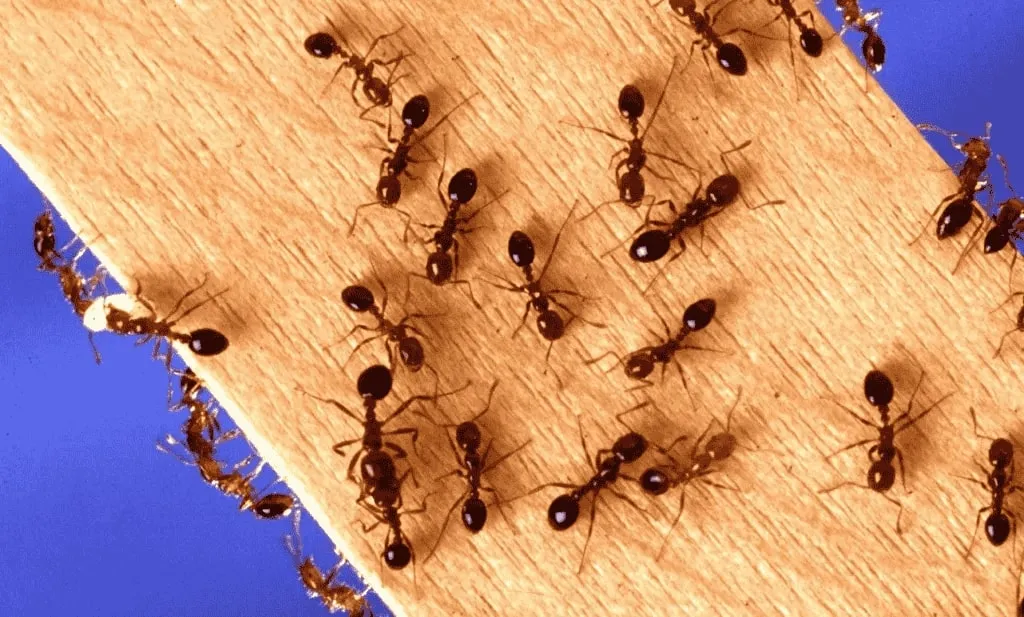
These are some of the most aggressive ants. They’re reddish-brown, medium-sized, and they build those distinctive conical mounds throughout your yard. The real problem? Their sting delivers venom that causes painful welts and burning that lasts for hours.
Fire ants are territorial and will swarm immediately if you disturb their mound. They’re also incredibly resilient and laugh at most DIY treatments. Their stings are painful enough that some people have genuine allergic reactions.
Ghost Ants
These tiny, pale-colored ants seem to materialize without warning. They’re fast, they’re hard to track, and they nest both indoors and outdoors. You’ll typically find them in kitchens and bathrooms—anywhere moisture exists and food is accessible.
The maddening part about ghost ants is they disappear when you treat them, then reappear weeks later because you never actually eliminated the nest.
Carpenter Ants
These are a variety that should concern you. Carpenter ants are large (up to half an inch), usually black or dark reddish-brown, and they tunnel through wood to create galleries for nesting. They don’t eat the wood like termites do. They simply hollow it out to live inside.
You might see a few carpenter ants in your home before realizing you’ve got a significant structural problem developing inside your walls. This is the species that demands professional attention.
Other Common Southern Ants
Pharaoh ants are tiny and golden. They nest in protected spaces and adapt quickly to treatments, making them frustratingly difficult to control.
Pavement ants nest in sidewalk cracks and soil. They’re generally just nuisance ants that contaminate food but don’t cause structural damage.
Thief ants are small and reddish, primarily outdoor nesters that occasionally venture inside searching for food.
How to Identify What Ants You’ve Got
Size tells you something. Fire ants measure around 1/8 inch. Carpenter ants reach up to 1/2 inch. Ghost ants are tiny and barely visible. Pharaoh ants are similarly small.
Color provides additional clues. Fire ants are reddish-brown. Carpenter ants are black or dark. Ghost ants are pale. These observations aren’t foolproof, but they’re your starting point.
Location matters significantly. Fire ant mounds scattered throughout your yard? You’ve got fire ants. Trails of minuscule ants streaming through your kitchen? Probably ghost ants. Large ants emerging from cracks in your walls or foundation? That’s concerning—probably carpenter ants.
When in doubt, photograph one and search online, or bring a specimen to your local extension office. They’ll identify it accurately and often provide species-specific advice.
Be sure to check out the 15 types of ants Southern homeowners deal with.
DIY Approaches That Work
Why Most DIY Attempts Fail
Spraying visible ants accomplishes nothing meaningful. You’re killing workers, a tiny percentage of the total colony. The queen continues laying eggs underground. So you’re addressing symptoms, not causes.
Haphazardly mixing borax-based solutions and leaving them around is dangerous and often ineffective. The concentration matters, placement matters, and random applications typically fail.
Internet remedies like cinnamon, coffee grounds, and diatomaceous earth have enthusiastic advocates, but they’re folklore rather than proven solutions for established ant colonies.
What Actually Gets Rid of Ants?
Ant baits. The magic of baits is that ants find them attractive enough to collect and carry back to the colony. The poison then spreads to the queen and developing ants. It takes time (usually one to two weeks), but it eliminates the entire colony instead of just visible workers.
Placement matters significantly. Put baits near ant trails, not necessarily at the mound itself. Ants follow established highways, and positioning baits along those routes increases the odds they’ll transport them back to the nest.
Removing what attracts them. Ants didn’t arrive randomly. If you’ve got crumbs, sticky surfaces, accessible pet food, or standing water, you’re maintaining a welcoming environment. Clean thoroughly and store food in sealed containers. Fix leaky pipes. Don’t leave pet food outside overnight.
Sealing entry points. Walk around your home’s foundation looking for cracks, gaps, and spaces. Caulk what you find. This won’t permanently prevent ants, but it reduces available access routes.
Eliminating outdoor nesting sites. Remove piles of wood, excess mulch, and yard debris where ants establish colonies. Store firewood away from your house. Keep gutters clean. Trim vegetation away from your home’s exterior.
When Professional Help Makes Sense
If you’re dealing with fire ants, ghost ants, or any well-established colony, professional treatment typically outperforms DIY efforts. That’s because professionals, like those at Green Queen, understand ant behavior in ways amateurs typically miss.
We know where different species actually nest and which baits those species actually prefer. We also understand application timing and methods that DIY attempts get wrong. Plus, we have access to treatments that are more effective than what’s available over-the-counter.
For carpenter ants, this becomes genuinely critical. You need someone who can inspect your home’s structure, locate their galleries, and eliminate them before structural damage becomes expensive. Identifying carpenter ant damage requires trained eyes and systematic inspection.
Ghost ants in your kitchen? Professionals understand that you need simultaneous treatment of both your interior and exterior, and they know which baits ghost ants actually select.
Fire ant mounds? A professional doesn’t just treat the mound you’re looking at. They develop a systematic yard treatment because fire ant colonies are interconnected and incomplete treatment simply relocates the problem.
Green Queen’s ant control services begin with proper identification and customized treatment strategies. We don’t blanket-spray everything. We address your specific ant situation with the approach that actually works.
How to Stop Future Infestations
Once you’ve eliminated your current ant problem, prevention becomes relatively straightforward.
Store food properly. This prevents future infestations from establishing. Sealed containers in a clean kitchen are far less attractive than crumbs and open packages sitting on counters.
Secure garbage containers. Ants are attracted to food waste. Keeping garbage in sealed containers significantly reduces that draw.
Stay vigilant during peak seasons. Spring and summer are when ant populations explode. Increase inspection frequency during these periods.
Maintain your yard strategically. Regular maintenance reduces suitable nesting habitat. Pull mulch back from your home’s foundation (at least six inches). Trim vegetation. Remove deadwood and debris where ants establish colonies.
Address moisture issues. Ants require water. Fix leaky pipes, ensure proper drainage around your foundation, and don’t overwater landscaping against your home’s exterior.
Keep sealing cracks. This isn’t a one-time project—it’s ongoing maintenance. Check your foundation, siding, and around windows regularly. Caulk any openings you discover.
Common Questions Southern Homeowners Ask
Ready to Solve Your Ant Problem?
DIY ant management works sometimes, but understanding when to try it yourself and when to call professionals is what separates “managing the problem” from “actually solving it.”
Still not sure how to get rid of ants, or finally ready to take care of your ant problem? Either way, reach out to Green Queen today to learn more about eco pest control and lawn care! We proudly offer these services to the following areas: