
All About Crabgrass Preventer for Southern Lawns
Learn How to Kill Crabgrass, What It Looks Like & More
Crabgrass is a major thorn in the side of homeowners. It’s hard to eradicate and doesn’t look pretty, either. But what separates a yard that wins against crabgrass from one that loses to it every summer?
Choosing the right crabgrass preventer, putting it down at precisely the right moment, and building turf that’s healthy enough to crowd out weeds. The eco-friendly lawn care team at Green Queen has put together everything else you should know about weed control for crabgrass.
Is That Crabgrass or Not?
Crabgrass is a summer annual that dies with the first hard freeze. The cold doesn’t kill the problem, though. It just pauses it. Before dying back, each plant drops staggering numbers of seeds into your soil, where they stay dormant through winter. When temperatures climb again, they’re primed and ready to sprout.
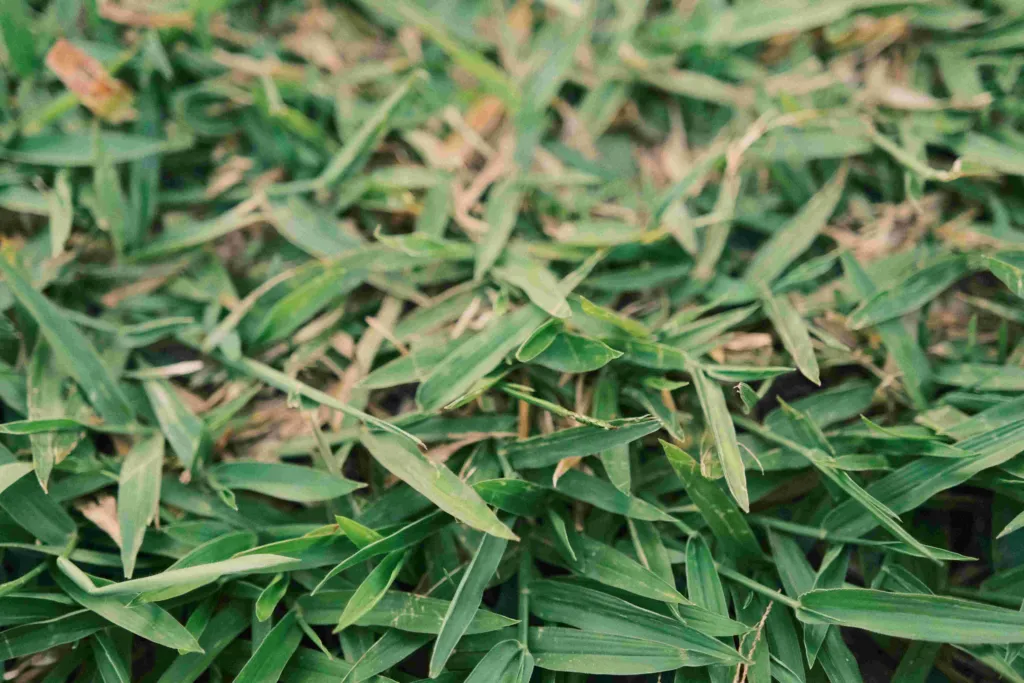
The name describes the weed perfectly. Crabgrass fans outward from a single center point, hugging the ground in all directions…like a crab with its legs spread flat. Early on, the blades blend into a lawn convincingly enough that most people don’t notice the invasion until it’s well underway.
Here’s what you’re looking for with crabgrass:
- A sprawling, low-growing form that spreads outward rather than reaching upward
- Stems that stretch noticeably past the height of the surrounding lawn
- Leaf blades that are considerably wider and flatter than typical grass
- Visible fine hairs along the leaves and stem edges
- A pale or slightly yellowish-green color that reads differently than healthy turf around it
If you’re not completely sure, take a photo and bring it to a lawn care professional. Goosegrass is a common southern lookalike that calls for an entirely different treatment approach. Misidentifying it costs you time, money, and another season.

Crabgrass Preventer Is Key
Rather than attacking mature plants, crabgrass pre-emergent builds an invisible chemical barrier just beneath the soil surface. It blocks germinating seeds from ever developing a root system. No roots means no plant, and no plant means no problem.
There are two main delivery formats:
Liquid pre-emergents spread quickly and evenly, covering the lawn with consistent saturation. They call for spray equipment and a methodical application approach, which is one reason professional lawn care programs tend to reach for them. The precision they offer is hard to match.
Granular pre-emergents suit the homeowner approach well. A standard broadcast spreader handles them easily, and they’re available at virtually any hardware or garden center. One thing you absolutely cannot skip: watering them in after application. A granular product left dry on the surface never reaches the soil layer where it needs to work. Rain or irrigation moves it where it belongs.
When to Apply Crabgrass Killer
Timing is the single biggest variable in whether your pre-emergent program succeeds or stumbles.
Soil temperature is your most reliable guide. At two inches deep, once the reading climbs into the 55–60°F range, germination begins. A basic soil thermometer removes all the uncertainty and costs next to nothing.
Prefer to read the landscape itself? Two flowering shrubs track germination windows surprisingly well:
- Forsythia: These bright yellow spring blooms signal that you have a few weeks left before crabgrass germination begins in USDA Zones 5 through 8.
- Lilacs’ bloom period falls in much closer alignment with actual germination in Zones 3 through 7. When lilacs fully open, your treatment window has essentially arrived.
In the South, the timeline shifts earlier than most of the country. Soil temperatures can cross that germination threshold as early as February or March, and the active pressure period extends much further into the season than it does up north, where April is typically the target. Plan accordingly.
One wrinkle to remember is that your yard heats unevenly. Open, sun-drenched areas reach germination temperatures weeks before shaded zones, north-facing slopes, or spots under tree cover. A single treatment date won’t perfectly serve every corner of a larger property.
The Case for Applying in Two Rounds
Splitting your pre-emergent into two applications rather than one is one of the most effective upgrades you can make to your crabgrass control program.
Crabgrass doesn’t germinate in one coordinated wave. Seeds sprout in successive rounds as soil temperatures continue climbing. A single application can exhaust its protective lifespan before that germination window fully closes.
The approach is straightforward:
- First application: when soil reads 50–55°F and your earliest environmental indicators appear
- Second application: six to eight weeks later
Lawn care professionals throughout the South rely on this method because it maintains the chemical barrier across the full germination period rather than just the beginning of it.
Should You Even Use Pre-Emergent?
Pre-emergent applications work by disrupting germination. But it will stop your grass seed just as efficiently as it stops crabgrass. That’s a critical detail to understand before any application.
Newly seeded or sodded lawns need to fully establish first. Most lawn care professionals point to three or four complete mowing cycles as the minimum before any pre-emergent goes down. Applying it sooner risks disrupting the young root system while it’s still developing.
Overseeding and pre-emergent don’t mix. If you’re planning to thicken thin or bare patches with new seed this spring, skip the preventer entirely. Overseed instead, and push your soil improvement work into fall, where it can strengthen the lawn ahead of the next prevention cycle.
Why Crabgrass Sometimes Breaks Through Anyway
You did everything right. Crabgrass still appeared. What went wrong? One of these scenarios usually explains it:
Application was too early. Pre-emergents have a limited residual window. A January or February treatment can wear out before April germination peaks even arrive.
Application was too late. If seeds had already begun germinating when you treated, the product had nothing to work with. Pre-emergent is preventive, not corrective.
The product was under-dosed. Label rates are performance thresholds, not conservative guidelines. Applying less than directed consistently produces inconsistent results.
Spreader coverage had gaps. Uneven passes or missed zones hand crabgrass exactly the unprotected real estate it needs. Calibrate your equipment, maintain a steady walking pace, and overlap each pass to avoid gaps.
Underlying turf health was poor. Thin, compacted, or nutrient-depleted grass struggles to hold off weeds regardless of what’s applied.
Granular product was never watered in. It stays on the surface and never forms the soil barrier it’s designed to create.
The soil was disturbed post-application. Aerating, heavy raking, or digging after you’ve applied pre-emergent physically breaks apart the chemical barrier you laid down.
How to Get Rid of Crabgrass That’s Already Growing
Miss the prevention window? Post-emergent won’t undo a summer that’s already gone, but treating existing plants does limit how much seed they deposit into your soil for the following year.
Go After Young Plants Early
Crabgrass caught in spring, before it has spread and thickened, responds far better than the dense, deep-rooted growth you encounter by midsummer. Acting early takes less product and delivers better results.
Three Things That Improve Post-Emergent Results
- Hold off on mowing for at least 48 hours before and after treatment
- Most established infestations need a follow-up application roughly 7 to 10 days out
- Thorough coverage across the full leaf surface matters
Crabgrass Control by the Seasons
Spring: Track soil temperature starting early in the season and get your pre-emergent down before that 55–60°F mark arrives. In the South, that can happen fast.
Plan for a split application from the start. Set your mower deck to a higher cut on the very first pass. Taller grass enters peak season with a meaningful head start.
Summer: Inspect regularly for any crabgrass that pushes through despite your prevention work and address it immediately.
Water on a deep, infrequent schedule rather than frequent shallow sessions, and resist dropping your mowing height when the lawn looks stressed.
Fall: Aerating to break up compaction, fertilizing to reinforce root depth, and overseeding thin spots all shrink the available territory crabgrass has to occupy the following spring.
The work you put in during October directly shapes what your lawn looks like the next May.
Building a Lawn That Resists Crabgrass on Its Own
No program delivers its best results on top of struggling turf. Long-term crabgrass control means developing grass that’s dense and vigorous enough to leave weeds very little opening.
Get a soil test. Off-target pH or nutrient imbalances handicap your lawn before the season even begins. A basic test tells you what specifically needs correcting rather than guessing.
Water deeply and less frequently. One thorough soak per week drives turf roots deeper into the profile, putting them outside the zone where weeds germinate most easily.
Consider corn gluten meal if you’d prefer to reduce synthetic inputs. It builds effectiveness over multiple seasons of consistent use rather than delivering immediate results, and it contributes a modest amount of nitrogen to the soil as an added benefit.
Raise your mowing height. Taller blades shade the soil and reduce the heat and light that crabgrass seeds need to get started. They also support a more extensive root system, which improves drought resistance. Habitually cutting low is one of the most reliable ways to create conditions where crabgrass thrives.
Aerate on a regular schedule. Crabgrass handles compacted soil better than most desirable grass species can. Aeration loosens that compaction, restores water and nutrient movement through the soil, and gives your grass roots the growing conditions they need to stay competitive all season.
Green Queen Is Here to Help!
Getting ahead of crabgrass takes the right products, well-timed applications, and turf that’s healthy enough to hold its ground. The prevention window is short, it shifts with local conditions every year, and falling even slightly behind schedule can mean managing an active infestation through the hottest months on the calendar.
So reach out to Green Queen today to learn more about eco pest control and lawn care! We proudly offer these services to the following areas:
Crabgrass FAQs
-
Can fertilizer and pre-emergent be applied at the same time?
Generally, yes. Combination granular products containing both are widely available and save you a trip across the lawn.
-
Does crabgrass die out permanently over winter?
The plant does. The thousands of seeds it deposited into your soil absolutely do not.
-
Can I overseed and apply pre-emergent at the same time?
No. Pre-emergent blocks grass seed germination just as thoroughly as it blocks crabgrass seed germination. These two tasks belong in different seasons.
-
Crabgrass has overtaken most of my lawn — will pre-emergent help?
Not at this stage. Established, actively growing crabgrass is completely unaffected by pre-emergent treatments.
-
Can a mower spread crabgrass around the lawn?
It can, particularly once seed heads have formed. Bag clippings when crabgrass is seeding if you can.