
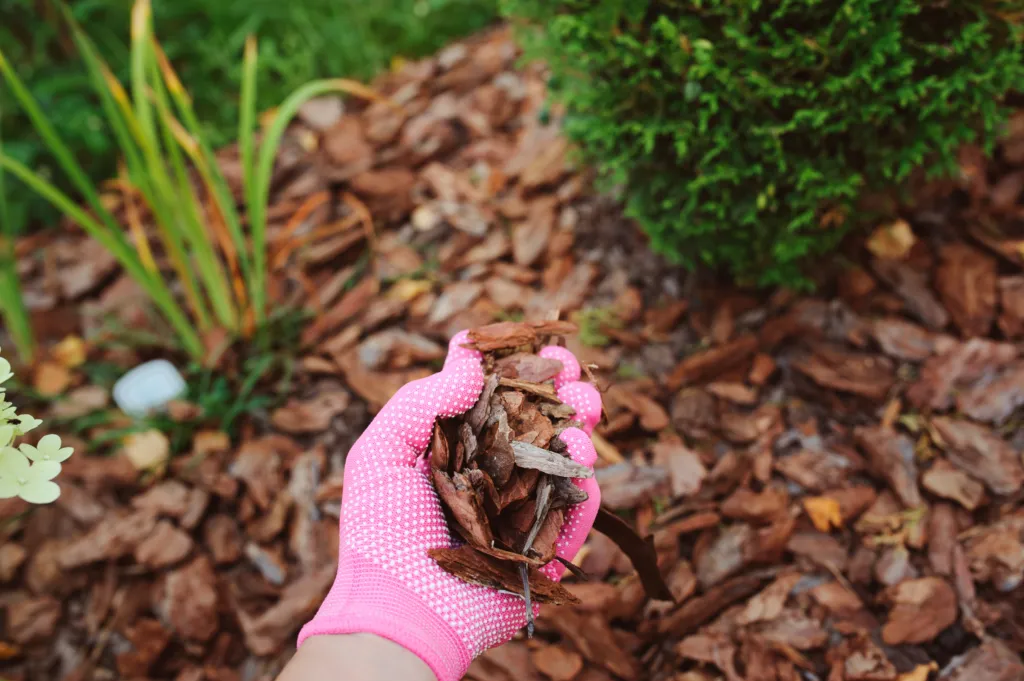
Top Tips for Mulching Leaves on Southern Lawns
Discover the Best Ways to Shred Leaves This Fall
Article at a Glance:
- Mulching is mowing over fallen leaves and letting the shredded pieces stay on the lawn
- The South’s fall leaf season varies by city and tree species, but the volume tends to be concentrated enough that frequency matters more than technique
- Shredded leaves return primary nutrients to the root zone, build soil biology, and help suppress weeds
- Two conditions determine whether mulching works: dry leaves and manageable volume per session
- Reach out to the lawn care experts at Green Queen to enjoy a beautiful yard in every season
Details on Fall & Leaf Mulching in the South
Fall isn’t the same all across the South. Atlanta’s tree canopy turns and drops differently than Nashville’s. Austin’s climate produces a different leaf season than Charlotte’s. What these cities share is a fall that tends to be compressed, with trees holding leaves longer before releasing them more quickly once temperatures shift.
A yard that loses most of its leaf canopy over two weeks rather than six needs more frequent attention during that window than a yard where the drop is gradual and manageable on its own.
If you’re mowing once per week, you can handle a gradual drop easily. However, you’ll fall behind quickly when a week of cool nights triggers a sudden release from oaks, maples, or sweetgums that had been holding since September.
It’s crucial to take the tree species into account, too. In some areas of the South, there are large-leafed sugar maples, red maples, and tulip poplars that drop heavily and break down easily. Other regions feature large water oaks and willow oaks that shed in high volume with leaves small enough to shred efficiently.
You may also have cedar elms that drop early and heavily in fall as well as live oaks or pecans that shed lots of leaves late in the season.
In short, when it comes to mulching leaves, knowing which trees are on your property and roughly when each one drops is more useful preparation than any calendar date.
Why Mulching Is Better Than Raking
Raking, bagging, and hauling to the curb will clear leaves from your lawn. It also takes more time, produces plastic waste, and removes organic material that your yard could use. Mulching does the same thing while improving your soil.
When a mower passes over fallen leaves, the blade chops them into small pieces. Those fragments settle through the grass canopy on the soil surface, where decomposition begins. Then all of this happens:
Nutrient cycling. Similar to fertilizer, decomposing leaf fragments release nitrogen, phosphorus, and potassium into the root zone over several weeks. Lawns that get consistent leaf mulching through fall need less supplemental fertilizer later.
Soil biology. Mulch is food for earthworms, beneficial fungi, and the microbial communities that improve soil structure. As those populations grow, they create the space for water to soak into the soil, air to reach roots, and nutrients to be taken up more efficiently.
Weed suppression. A thin layer of decomposing material at the soil surface reduces the light exposure that many weed seeds require to grow. Common Southern lawn weeds including crabgrass, chamberbitter, and doveweed all depend on light to trigger germination. Mulching won’t replace a pre-emergent herbicide program, but it helps in your battle against weeds.
Reduced landfill waste. Mulching leaves is an eco-friendly lawn care practice. Yard waste that gets bagged and landfilled decomposes without oxygen, generating methane. Material that breaks down on-site doesn’t produce that methane. It also keeps phosphorus out of storm drains and the waterways they connect to.
Factors That Impact the Effectiveness of Mulching
Equipment matters less than conditions. A standard mower with a sharp blade mulches leaves adequately. A dedicated mulching blade produces finer fragments and clog-resistant performance, but it’s an improvement rather than a requirement.
When conditions support mulching:
Dry leaves on dry turf. Wet leaves are harder to chop up. They clump under the deck, stick together in the discharge, and produce matted chunks that sit on the turf rather than filtering through it. In other words, wait for dry afternoons after a stretch without rain. This will produce better results.
Coverage within the mowable range. After a mulching pass, roughly half the grass surface should be visible beneath the shredded fragments. If the lawn is still mostly obscured, the session is processing more than it can handle.
Established turf. A lawn with a developed root system and a closed canopy absorbs and integrates shredded leaf material easily. Newly seeded areas and recently installed sod depend on unobstructed light and airflow during establishment, so mulching isn’t the best idea.
When to rake instead:
Diseased leaves. Fungal infections and similar diseases on fallen leaves don’t necessarily die with the leaf. Distributing that material across the lawn surface keeps active pathogens in contact with the turf. If the source tree showed signs of disease during the growing season, removing the leaves is your best bet.
Large layers. Four to six inches of loose, uncompressed leaves is the upper limit of what a mower can handle. Beyond that, the mower is more likely to create a compacted mat than to shred the material effectively. Rake the excess into garden beds as winter mulch or build a compost pile.
Properties draining toward water features. Phosphorus that benefits a lawn creates algae problems in lakes, ponds, and streams.
Lawns with a history of fungal disease. Brown patch, gray leaf spot, and similar diseases that trouble Southern warm-season grasses can persist in thick organic material sitting against the soil surface through the cooler, wetter months of a Southern winter. If fungal problems have happened in previous seasons, a thorough late-fall cleanup reduces the conditions that support them.
What to Do Before Winter
Southern winters are mild relative to the Midwest and Northeast, but they’re not without consequence for leaf management decisions. While the specific risk varies by city, here are some situations to keep in mind.
Leaves frozen against the soil surface are harder to remove and more damaging to the turf beneath them than leaves cleared before conditions arrived. Try to do one final round of mulching or raking before the first forecast of sustained freezing temperatures.
In Nashville and Charlotte, that window typically closes in late November. In Atlanta and Austin, December is often still workable, but watching the extended forecast is the more reliable approach.
Beyond the freeze risk, the cooler and wetter months of Southern winter are when fungal conditions are most favorable for warm-season turf. A lawn surface clear of heavy organic accumulation heading into that period is less vulnerable than one that isn’t.
Steps to Effectively Mulch Leaves
A few specific habits consistently create the best mulching results.
- Choose the right window. Dry leaves, dry turf, calm afternoon with manageable humidity. If rain came through recently and leaves are still damp and clumped, waiting a day or two costs less time than trying to work with wet material that won’t shred cleanly.
- Keep the mower at your standard fall cutting height. Lowering the blade to chop leaves does more harm than good. Bermuda, Zoysia, St. Augustine, centipede, and tall fescue all have appropriate seasonal mowing heights that should be maintained regardless of what’s on the surface.
- Remove the collection bag. The purpose of mulching is returning shredded material to the lawn. An attached or open collection bag captures what the process is supposed to leave behind.
- Slow your pace. Reducing mowing speed by roughly 25 percent gives the blade more contact time with each pass of leaf material, which produces finer fragments.
- Check the result and make a second pass if needed. After the first pass, fragments should be roughly dime-sized or smaller with visible grass beneath them. If the surface is still mostly covered or pieces are too coarse, run a second pass at a right angle to the first.
- Recognize when raking is the better option. If the lawn is still smothered after two passes, the mower is compressing rather than shredding. Rake the excess to beds or a compost pile and return to the remaining lawn in the next session.
Consistently Mulching Matters
The gap between a manageable mulching routine and an overwhelming one is almost always a matter of how often sessions happen rather than how effectively they’re done. Volume that a single weekly pass handles easily becomes a multi-step problem after three weeks of accumulation.
During peak leaf drop, once-weekly passes keep most yards in the manageable range. Dense canopies may warrant twice-weekly passes during the heaviest two or three weeks.
The goal heading into late fall is a clean lawn surface before conditions make clearing more difficult. Whatever remains after the last productive mulching sessions of the season should be raked to beds or composted rather than left in place.
A clean surface going into winter is easier to manage in spring than a matted layer that spent three months compressed against the soil.
Quick Troubleshooting Tips
If the lawn looks flattened or uneven after a mulching session…Volume exceeded what the mower could process in fine fragments. Rake the densest patches by hand, shorten the interval between future sessions, and try mulching at a slightly higher blade setting to avoid pressing material into the canopy rather than shredding it.
If your mower is clogging or slowing mid-pass…Either the material is too wet, too deep, or both. A thinner, distributed layer always processes more cleanly than a concentrated pile.
If leaf mat remains visible after two full passes…Dense or leathery leaves resist shredding more than thinner species. One additional pass at a third angle usually resolves it. If a mat persists after that, rake the remainder into beds rather than continuing to run the mower over it.
Answers to Mulching Questions
Do More for Your Yard Than Just Mulching Leaves
Leaf management is just one component of lawn care. There’s also fertilization timing, pre-emergent weed control, aeration, eco-friendly pest control, and more. If managing all of that yourself isn’t how you want to spend your fall, Green Queen handles it all while keeping the environment in mind.
Ready to take your lawn care and pest control to the next level? Reach out to Green Queen today! We proudly offer these services to the following areas: